
Where a routed boundary begins.
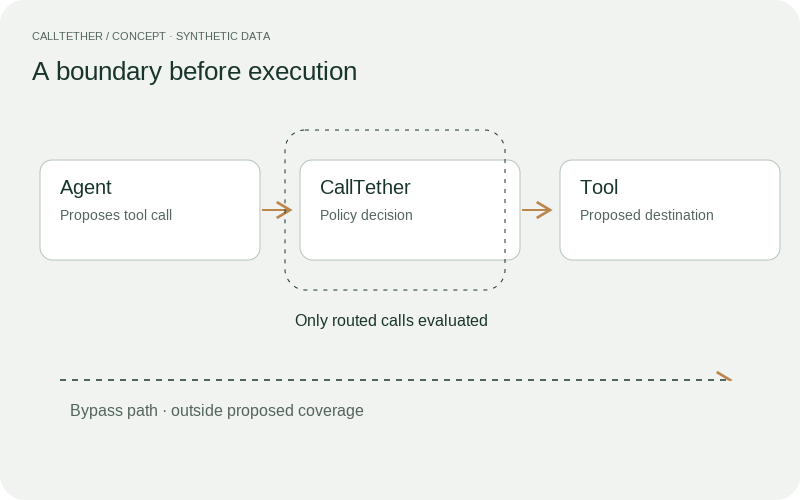
The first design decision is the route. It tells you which actions are eligible for evaluation and which remain outside the proposed boundary.
Start with an action you can name.
Choose one agent workflow: reading from a database, exporting records, creating a support ticket, or sending an external message. Identify the tool request and its destination before deciding which policy applies.
Map the route and its exclusions.
A policy decision point can only evaluate calls passed through its route. Document direct tool calls, manual access, and other paths separately. Coverage should always refer to eligible routed calls.
Agree on behavior at the boundary.
Define what an allow, deny, or approval outcome means for this route. Include failure and timeout behavior. Shadow-mode evaluation is a way to explore proposed decisions without implying production enforcement.
Measure the scope you actually evaluated.
Volume, coverage, and outcome measures need a clear denominator and test period. Keep example figures labeled until measured evidence is available.