
Architecture / 04 min
Where a routed boundary begins.
A practical way to identify eligible calls, destinations, and the coverage gaps that routing creates.
Read the field note
Explore the thinking behind policy boundaries, routed tool calls, and deliberate review. These guides explain the proposed model.
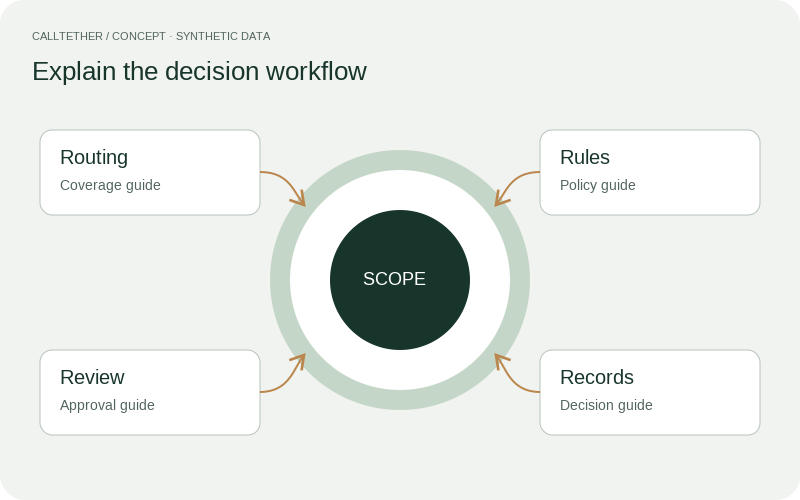
A practical way to identify eligible calls, destinations, and the coverage gaps that routing creates.
Read the field note
How to think about actions, destinations, scopes, and the minimum fields a policy needs.
Read the field note
Define the reviewer, the context, and what happens when an exception cannot be reviewed.
Read the field noteThe proposed boundary evaluates agent tool calls routed through it, using the action, destination, and agreed policy context. Direct calls and unmonitored systems are outside that route.
A guided prototype walkthrough of a routed request, a policy check, a decision, and a reviewable record. All displayed data is synthetic.
This website presents a concept and product direction. Production capabilities, supported deployments, and availability have not been verified. A walkthrough can explore the proposed model.
Human approval is part of the proposed model. A scoped evaluation would define the reviewer, required context, and behavior when a review expires or an owner is unavailable.
Start by identifying one agent workflow and its route boundary. Agree on policies, success measures, and data handling before exploring a shadow-mode evaluation.
Coverage depends on routing. Only eligible calls passed through the proposed boundary are evaluated. It does not imply coverage of direct execution, manual access, or unconnected systems.
Bring one agent workflow. We’ll walk through the proposed route, its policies, and the decisions that matter.